The Monitoring Automation feature in EasyMedStat allows users to automate key monitoring tasks, such as sending email notifications when specific events occur during a clinical study. It enables real-time communication and enhances oversight for research teams, particularly in multi-site studies.
| This feature is only available on certain plans. If you can not access this feature, please contact your sales representative. |
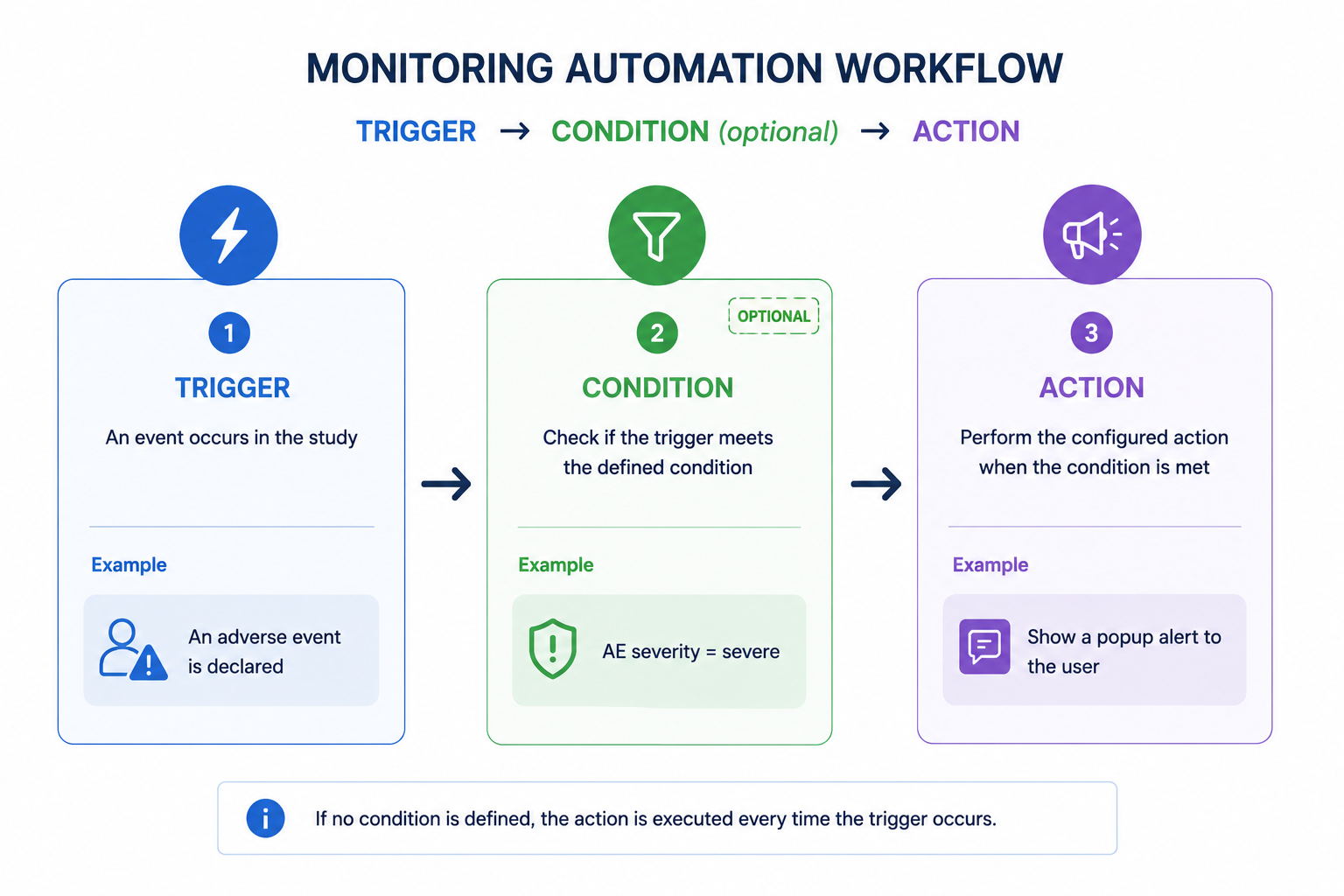
Key Functionalities
Automated Triggers
Users can define automations that trigger actions when specific events occur in the study database.
The available triggers in the current version are:
- Patient inclusion
Trigger actions when a new patient is included in the study. - Variable value changes
Trigger actions when the value of a variable changes, for example:- declaration of an adverse event
- abnormal laboratory value
- inconsistent visit date
- missing mandatory information
Available Actions
Email Notifications
When an automation is triggered, an email can automatically be sent to predefined recipients.
The email content can include:
- Patient-related variables
(patient identifier, inclusion date, direct link to the patient form, etc.) - User-related variables
(details about the user who performed the action) - System-related variables
(timestamps, study metadata, etc.)
Real-Time Alerts
Automations can also display contextual alerts directly inside the eCRF during data entry.
Three display modes are available:
- Popup alerts
Modal alerts requiring user interaction before continuing. - Side bar alerts
Persistent contextual notifications displayed in the eCRF side panel. - Below-variable alerts
Inline messages displayed directly below the related variable.
These alerts help users identify potential issues immediately during data entry and reduce data inconsistencies before monitoring or data cleaning.
Conditions and Filters
Users can refine automations using conditions based on:
- variable values
- study sites
- patient data
- study events
This allows highly flexible workflows adapted to each study design and monitoring strategy.
Audit Trail and Compliance
All automations are fully logged in the audit trail.
The system records:
- who created or modified an automation
- when an automation was triggered
- which alerts or notifications were displayed
- user actions related to alerts (for example Confirm or Cancel actions)
This ensures full traceability and supports study compliance requirements.
How to use it in practice?
The following articles will help you to use monitoring automations in your study:
Was this article helpful?
That’s Great!
Thank you for your feedback
Sorry! We couldn't be helpful
Thank you for your feedback
Feedback sent
We appreciate your effort and will try to fix the article